

Researchers and industry groups in Spain are working on ways to reduce greenhouse gas emissions from livestock farming. Their efforts include new feed ingredients, better manure handling and sector-wide climate targets for 2050.
According to the UN Food and Agriculture Organization (FAO), methane makes up 44% of the livestock sector’s greenhouse gas emissions. Nitrogen accounts for 29% and carbon dioxide for 27%. Cattle are the largest source, at about 4.6 gigatonnes of CO2 equivalent, or 65% of the total. Pigs, poultry, buffalo and small ruminants each account for between 7% and 10%.
Why methane is the focus
A researcher at the Basque Centre for Climate Change (BC3) said enteric methane, which ruminants produce during digestion, is an important target. Methane traps far more heat than carbon dioxide. It breaks down in about twelve years, whereas carbon dioxide persists for hundreds.
Small cuts in methane could therefore slow warming relatively quickly. Cutting methane emissions by 30% by 2030 is estimated to limit temperature rise by 0.2 ºC by the middle of the century.
Seaweed, citrus leaves and coffee grounds
One option is adding certain seaweeds to animal diets. A University of California, Davis study published in the journal Plos One found that an 80-gram dose of red algae could cut methane emissions by 82%. A botany professor at the University of A Coruña explained that the Asparagopsis group of algae contains halogenated bromine compounds that lower methane output in animals.
The species that could be used, Asparagopsis armata, is classed as invasive in Spain. It therefore cannot be harvested or sold there, although the professor noted that other European countries do not apply the same rule. Companies worldwide, especially in New Zealand, are already cultivating it for livestock feed. The professor expects it to be included in most ruminant feed in future.
Other ingredients are being explored in the meantime. The European project Low Carbon Feed was coordinated by the farmers’ union La Unió de Llauradors i Ramaders. It proposed using rice straw and citrus pruning waste, which are often burned and release gases harmful to human health. A professor at the Polytechnic University of Valencia directed the project’s work at that institution.
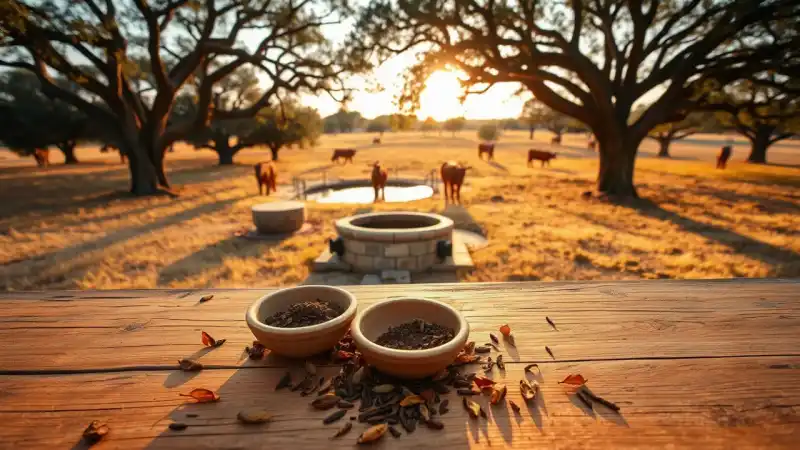
In demonstration trials, methane emissions fell by between 8% and 22% compared with a control diet. The researchers credited citrus leaves, which are rich in secondary metabolites such as tannins and essential oils that reduce methane-producing fermentation in the animal’s gut. The four-year project ended in 2020. Citrus leaves are now starting to be sold for use in compound feed for ruminants.
The technology centre Azti is studying coffee grounds from hotels, restaurants and cafés as feed. It ran tests with dairy cows and sheep, funded by the Basque Government, using diets containing 3–5% coffee grounds. The researchers saw a trend towards higher milk volume and fat content.
That work led to the larger European initiative Life-ECOFFEED, due to finish in 2024. It aims to cut CO2 generation and environmental impact, and to show that methane from the animals can fall. It also seeks to offer feed makers a local raw material that lowers dependence on imported soya meal and cereals.
Manure pits and ammonia
The BC3 researcher said a considerable amount of methane can be avoided in slurry pits. The organic matter decomposes without oxygen and releases methane. One solution is anaerobic digestion, which produces methane under controlled conditions so that it can be burned for electricity or heat. This cuts methane released into the atmosphere and generates renewable energy. Biogas plants usually need the slurry to be digested together with other materials, sometimes by-products from the food industry. The researcher also pointed to dehesa systems, which store carbon in soil and trees.
Ammonia is another challenge. It is one of the pollutants with emission ceilings under Directive 2001/81/EC. Spain has exceeded the limit of 353,000 tonnes a year since the directive took effect in 2010. In 2019, the last year with data at the time, it emitted 474,000 tonnes, 34% over the limit. The Ministry for Ecological Transition’s national inventory attributed 96% of these emissions to farming and livestock activities.
The BC3 researcher said that adopting Best Available Techniques can cut ammonia emissions by up to 80%. One example is injecting liquid slurry into the soil rather than spraying it on the surface.
Sector targets for 2050
Spain’s beef sector, represented by Provacuno, aims for climate neutrality by 2050. Its president called the goal ambitious but achievable. He said that better farm management could quickly cut emissions by 20% to 30%. He listed frequent removal of bedding, composting and biogas plants, and early application of manure to soils as useful practices.
Provacuno published a code of good practice drawn up by scientists from the Red Remedia network. It promotes efficient use of resources, from feed to manure. Its president also said that grasslands, woodland and dehesas where cattle graze absorb carbon, and that this absorption does not appear in emissions statistics.
The pig sector’s interprofessional body, Interporc, is also working towards climate neutrality by 2050, in line with the European Green Deal. Its president said greenhouse gas emissions per kilo of meat have fallen by more than 40% in fifteen years. He added that methane from enteric fermentation has fallen by almost 37%. He credited demanding European production rules, techniques for storing and treating slurry, Best Available Techniques, and feeding matched to each animal’s needs.
The sector also hopes to use European recovery money. The agriculture minister, Luis Planas, had said an agri-food strategic project (PERTE) would receive around €1,000 million. Interporc’s president said meat and livestock companies were ready to commit resources which, with Next Generation EU funds, could mobilise investment of more than €5,054 million.